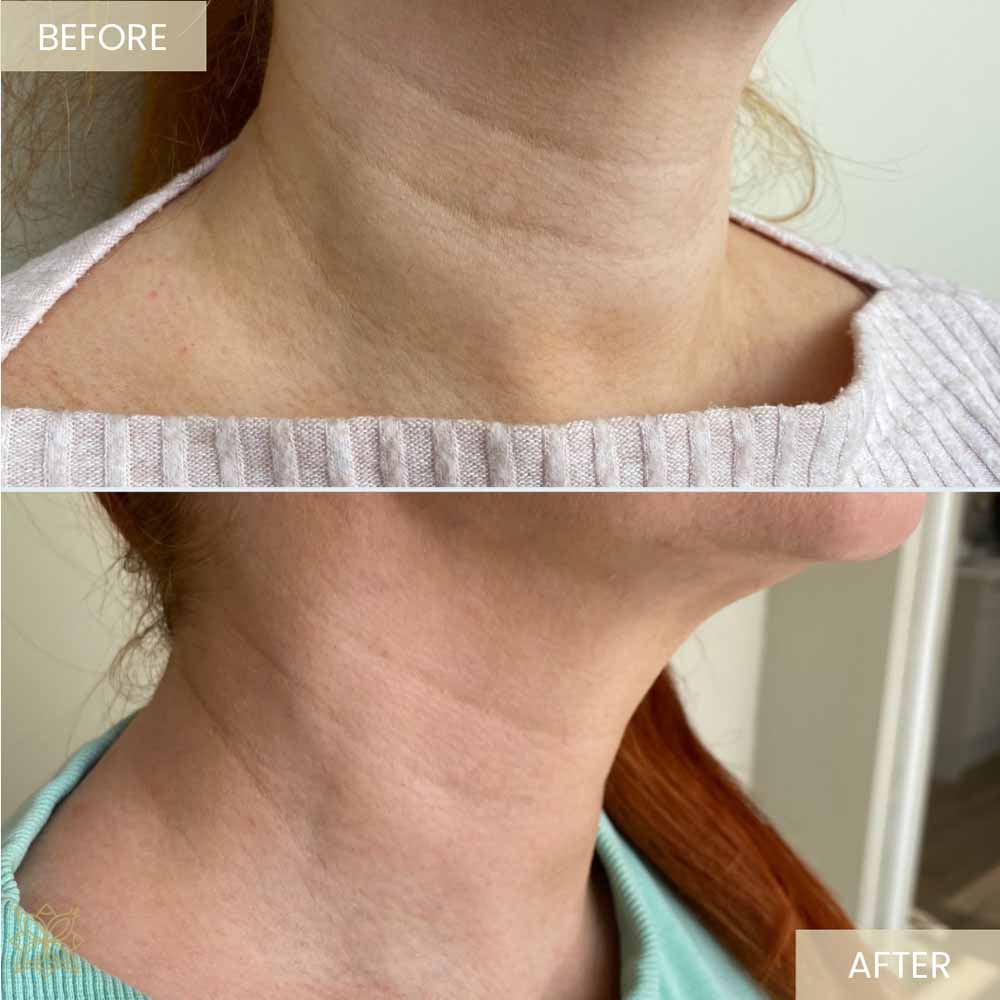

What to expect during a polynucleotide treatment appointment.
Prior to treatment, the skin is cleaned thoroughly and a numbing cream is applied. A runny gel containing polynucleotides is then injected into the skin using either a very small needle or a flexible, blunt tube called a cannula. Following treatment, you may notice some temporary puffiness, redness and bumps for 24-72 hours depending on the area treated and the technique used.
Most patients notice an immediate tightening effect, with brightening becoming more obvious after 14 days and optimum results 60 days after your third treatment session.
What can be treated with polynucleotides?
- Ageing skin, fine lines and wrinkles
- Under eye hollows and dark circles
- Wrinkles round the eyes due to crepey skin/loss of elasticity
- Necklace lines/tech neck
- Scarring
- Sagging skin/skin laxity
- Skin tone and texture
- Enlarged pores
- Superficial pigmentation and sun damage
- Collagen deficiency
- As a treatment to prime the skin prior to microneedling
- To improve how long dermal fillers last
- Dehydrated skin
- Crepey skin on the body
- C-section scars and skin on the abdomen
How many polynucleotide treatment sessions do I need?
For most patients, a course of 3 treatments with 2-3 weeks between each session is recommended. Following this, a maintenance treatment every 6-9 months is usually advised to refresh your results.
How long do polynucleotide results last?
For some concerns such as scarring the results can be extremely long lasting if not permanent. For an improvement of texture, skin quality and collagen levels, maintenance treatments are advised every 6-9 months.
Who can have polynucleotide treatment?
Polynucleotide treatment is a safe and suitable treatment for most people. It is not suitable for those who are pregnant or nursing. Your medical history will be assessed prior to treatment to ensure it is safe for you to proceed. Please book a consultation to discuss this further and confirm suitability. This treatment is not suitable for those with a fish or shellfish allergy.
When will I see results from polynucleotides?
Most people will see instant brightening in the area treated follow by improved skin quality within a few weeks of their first session however maximum results will be seen after 60 days following your course of treatment. Usually 2-3 weeks between each treatment session is advised.
Can I have polynucleotides while pregnant?
As this treatment hasn’t been clinically tested on pregnant or nursing people, it hasn’t been proved to be safe. Therefore, this treatment is not available for those patients. Once you are no longer nursing, there is no time you have to wait before beginning polynucleotides.
What should I do before polynucleotide treatment?
It is recommended that you do not wear makeup to your appointment. Please avoid using active skincare ingredients such as retinoids (retinol, tretinoin, retinoic acid) and acids (lactic acid, salicylic acid) for 7 days prior to treatment.
Avoid any chemical peels or other skin treatments at least 14 days prior to polynucleotides.
What should I do after polynucleotide treatment?
Any redness should decrease over a 24 hour period. Refrain from touching the skin with hands for the rest of the day. Do not massage the skin for 2 weeks. Skin can be cleansed using a mild cleanser. Do not scrub the skin. Pat dry with a clean towel. Avoid facial products containing fragrance for 3-5 days after treatment as these may irritate the skin.
Makeup can be applied the next day but ensure brushes and sponges are clean. Avoid extreme temperatures such as sun light, saunas and steam rooms for 48 hours after treatment. Apply a sunscreen with an SPF30+ (ideally 50+) on a daily basis and with regular applications for a period of at least 2 weeks. Avoid electrolysis, waxing, bleaching, depilatory creams and laser hair removal for at least 14 days if treated in the area. Avoid facial treatments such as chemical peels for at least 14 days. Avoid going swimming until there is no more redness or inflammation.
Are polynucleotides safe?
Polynucleotides have an excellent safety record. There are very few adverse reactions reported for this treatment by any clinician and they have been used for many years in the medical field for the management of wounds, burns, ulcers and scars.
What should I expect immediately after polynucleotide treatment?
After your treatment, depending on the area treated your skin may be red or pink, there may be some puffiness and swelling due to the gel used (this gel will break down by itself and be cleared by the body within 14 days, but the results will remain). For most people the redness will resolve over 24-48 hours. Sometimes it can take 3-4 days for skin to return to its normal colour and you may have some bruises for longer than this. Very rarely, a larger bruise can form which takes longer to heal. You can wear makeup the next day. You will be advised what products to use following your treatment. Please only use these and avoid any ‘active’ ingredients such as retinoids, acids (glycolic acid, vitamin C, salicylic acid) until the skin is no longer inflamed/red. Please use an SPF30 or above daily.
How do polynucleotides work?
The polynucleotides act on the collagen producing cells known as fibroblasts as well as cells known as osteoblasts and adipocytes. They help protect against cellular damage and free radicals, as well as prolonging hyaluronic acid activity by 40%.